
Family member OSINT leaks
You locked down your social presence. Your spouse posted a school PTA newsletter that lists you as a parent. Your kid tagged you in a sports photo. Your in-laws have everything public.
Family-member leaks are how most well-protected first responders eventually get identified. OSINT is the work of digging up what's public about a person — and the chain usually runs through someone who isn't on the job and didn't think operational security (the day-to-day habits that keep work life out of home life) applied to them.
What an adversary sees
Your locked-down profile doesn't matter if your relatives are wide open. Common chains:
- Spouse LinkedIn. Public profile listing employer and city. Your name surfaces as "spouse" or via tagged photos. Cross-references to your department through a wedding announcement.
- Kid's club soccer roster. PDF on the league site listing player name, parent name, and contact phone. Indexed by Google.
- Parent Facebook. Public, full of "so proud of my son the officer" posts. Lists your hometown and high school, often with maiden names that defeat your alias attempts.
- Sibling reunion post. Fully public, full names of every family member, location of the reunion at someone's house.
- In-laws' anniversary post. Photo of a card from "Mike and Sarah and the kids" at the front door, house number visible.
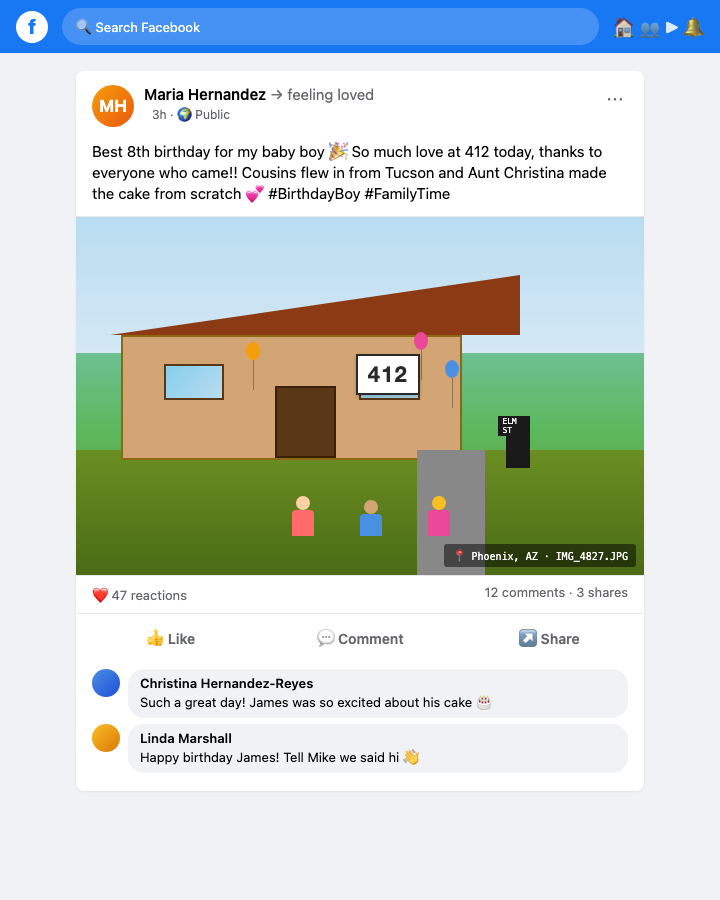
The adversary builds the family graph from one weak link, then data brokers confirm the address through "known relatives."
How to do this on yourself
Walk the chain the way an analyst would. Search each family member individually.
For each immediate family member (spouse, kids, parents, siblings, in-laws):
- Google their full name with city:
"First Last" "your city" - Check LinkedIn for them and read what's public to a logged-out viewer
- Check Facebook for them, including the About > Family section — that's where you'll get named
- Search
"Your Last Name" site:facebook.comto catch tagged posts that mention your family - For kids, search the school district name plus their first name and the sport they play
- For parents, check
"Parent Name" "Your Hometown"— old neighborhood papers and church directories surface here
Note every result that names you or pins your address. The pattern is usually the same: one or two leaky relatives carrying the whole chain.
What to do about what you find
The conversation with the household is the hard part. Specific asks beat vague "be careful."
For your spouse:
- LinkedIn: hide connections, set profile photo to non-identifying, scrub mentions of you and the kids
- Facebook: friends-only, scrub family list, no public tagged photos of the house
- No public posts about your job, your shifts, your department promotions
For your kids (age-appropriate):
- No location tags, no school name in bio, no posts in the school parking lot
- Untag you in everything historical
- The talk: "if someone asks where I work, you don't know"
For parents and in-laws:
- Lock down or delete. Most won't. At minimum, no posts naming you with your job title.
- No "proud of my son the officer" posts ever. That's the single highest-value post for an adversary.
For extended family:
- The reunion photos are usually the worst offenders. Ask to be untagged or excluded.
If a family-member leak is already being exploited, see the I'm being doxxed playbook.
What we handle automatically
Family conversations are on you. But the place every family-OSINT chain ends — the data broker that confirms your home address through "known relatives" — is what we close.
We do whole-household broker cleanup, not just you. Spouse, parents, adult kids living with you. The "known relatives" cross-reference on TruePeopleSearch, Spokeo, and the rest is what an adversary uses to confirm "Officer Smith's brother lives at 412 Elm, so Officer Smith probably lives in the same county." Removing the household closes that step.
Run a free scan on yourself first, then we'll walk the household cleanup. Without the broker confirmation, the family chain runs out of road.
Most OSINT chains end at a broker page that ties your name to a home address. Run a free scan to see what's currently exposed.